A homeowner can decide whether you belong on their short list before you ever get a chance to explain your work. That puts a different responsibility on a small real estate business: make the evidence of your expertise easy to find, easy to understand and useful without a sales pitch.
Zillow’s latest release makes that worth a closer look. In its November 17, 2026 announcement, the company says it now shows a curated list of Zillow Preferred agent partners on eligible off-market home pages. The agents shown have recently sold similar homes nearby. The feature appears only where that matching activity exists, and Zillow says it is available on the web, iOS and Android.
Real Estate News also reported the launch on November 17. This is a new way for a seller to discover an agent within Zillow’s partner network, not a comprehensive ranking of every local professional.
There’s a reasonable consumer benefit here. Relevant recent experience gives a homeowner something concrete to evaluate. Participating agents may gain a useful source of introductions. But I wouldn’t want a platform’s selection process to be the only place a seller could see why my business deserves a conversation.
Make your experience easier to evaluate
Most agents have plenty of information about what they’ve sold. The more useful question is whether a prospective client can understand the work behind those transactions.
A sold address establishes activity. A clear explanation of the situation, the decision and the result helps someone evaluate your judgment. Those are different jobs. Your website and listing presentation should do both.
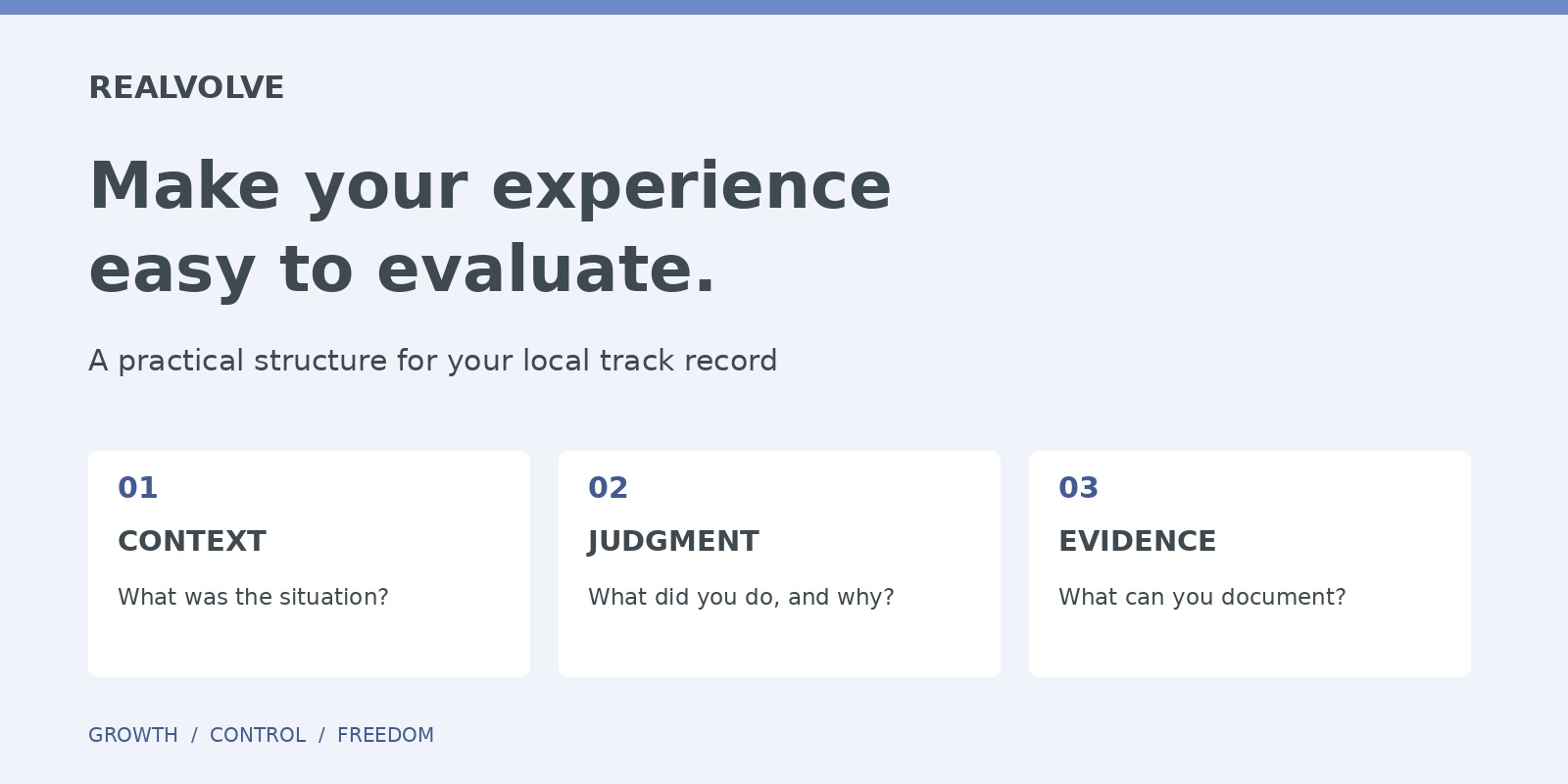
Start with a small set of completed transactions that reflect the work you want more of. For each one, write a short account of the challenge, the options you considered, the action taken and the documented outcome. Include the period and relevant property context. Explain your role accurately, especially when a team or another agent shared the work.
Keep the claims modest. A home selling above asking doesn’t, by itself, prove that an agent created extra value. The initial pricing, property condition, market and seller’s priorities all matter. A useful case note explains those limits rather than hiding them behind a large percentage.
Publish only information you’re authorized to share. Keep private client details out, get permission where needed, and follow your brokerage’s advertising and data-use requirements. The point is to make your judgment visible, not turn a client’s circumstances into content.
Give that evidence a dependable home
I’d put those short case notes on a page the business can maintain directly, then use the relevant example in consultations, personal introductions and follow-up. Keep the source documents and approved copy somewhere dependable too.
A portal profile can be valuable. So can a brokerage page. Neither removes the need for a current account of your work that you can revise, verify and reuse within your permissions. Check that your service area, role and experience are described consistently wherever a prospective seller might encounter you.
This isn’t a promise that a better page will generate leads. It gives people who are already evaluating you something more useful than a generic claim about exceptional service. It also saves the team from rebuilding the same explanation every time someone asks about your experience.
For a newer agent, the honest version may be a clear service process, relevant training and examples of analysis, labeled as examples. Don’t borrow a team’s entire history and present it as your own. Specificity helps only when it’s true.
Find out what actually earns the conversation
When someone contacts you, record how they first heard about you and what helped them decide to reach out. Those answers may differ. A past client might make the introduction, while a case note or profile gives the homeowner enough confidence to book a meeting.
Keep both pieces of context. If you credit only the final click, you can miss the relationship that created the opportunity. If you credit only the referral, you can miss the material that helped turn it into a conversation.
Use that information to make a narrow decision. If people repeatedly ask whether you’ve handled a particular property situation, make the relevant experience easier to find. If they arrive with the wrong expectations about your services, fix the explanation. If nobody mentions the new material, don’t assume it’s working simply because it looks polished.
The useful measures are consultations, signed engagements and the time required to prepare for them. Page visits can provide context, but they aren’t the outcome. Small samples and long sales cycles call for patience; a few inquiries won’t establish a reliable conversion rate.
Make collecting the evidence part of finishing the work
The easiest time to capture a useful case note is while the decisions are still fresh. Add a short review to your closing process: what happened, what can be substantiated, what may be shared, and who will approve the final version.
Keep the private record separate from the public story. Assign an owner and a review date so outdated claims don’t linger. A quarterly check of a small, accurate collection is more useful than a large archive nobody maintains.
Realvolve’s contacts, transactions and workflows can provide the operating foundation for those records and recurring responsibilities. The interpretation, permission checks and final publishing decision still belong with your team. This is a process to build, not an automatic case-study feature.
Zillow’s announcement doesn’t tell us how much seller business this new feature will produce, or what it will mean for an individual agent’s economics. I’d judge any resulting channel by its actual terms, costs and results. Meanwhile, making your own work easier to evaluate is a decision you can act on now.
For help making that review part of your operating routine, bring one completed transaction to a Realvolve walkthrough. Start with the work you can document. Make it useful to the next person deciding whom to trust.
Sources
- Zillow, consumer-tool announcement, November 17, 2026. Company announcement distributed through PR Newswire; product availability and matching criteria are Zillow’s statements.
- Real Estate News, report on the consumer-tool launch, November 17, 2026. Reporting on the same announcement, not independent performance validation.